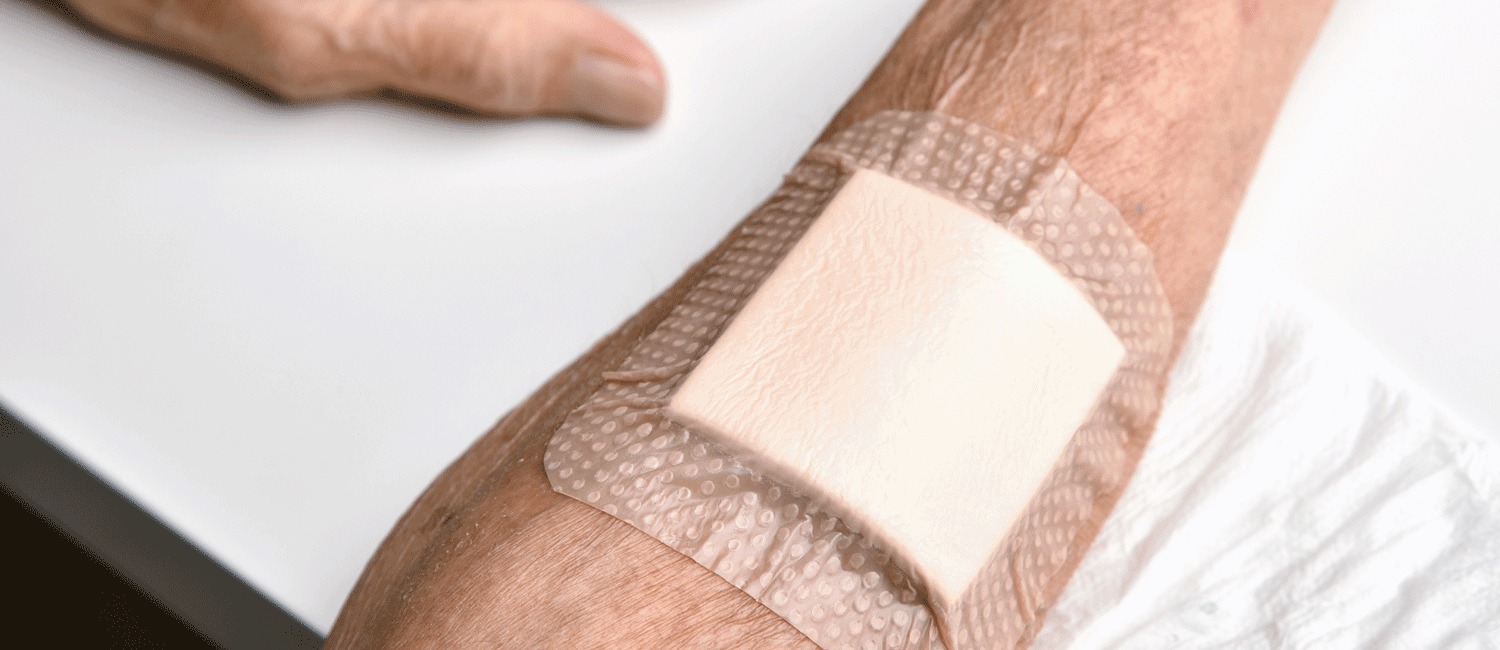
India Advanced Wound Care Market Outlook
This IMARC Group study provides a forecast of market size, share, and emerging trends for the India Advanced Wound Care Market for 2026–2034. The report covers segmentation by product, application, end user, and region, with regional coverage across North India, West and Central India, South India, and East and Northeast India.
Market Snapshot
- Base Year Market Size (2025): USD 445.0 Million
- Forecast Market Size (2034): USD 717.1 Million
- CAGR (2026–2034): 5.45%
Current Size of the India Advanced Wound Care Market
The Advanced Wound Care Market in India reached USD 445.0 Million in 2025 and is projected to reach USD 717.1 Million by 2034, growing at a CAGR of 5.45% during 2026–2034. India Advanced Wound Care Market growth rests on the country’s diabetic foot ulcer burden exceeding 100,000 amputations annually, NPWT adoption growing at 10.6% CAGR, expanding hospital infrastructure, and indigenous low-cost product development widening access beyond tertiary centres.
Emerging Trends in the India Advanced Wound Care Market
NPWT Outpaces the Broader Market on Clinical Adoption
India’s negative pressure wound therapy market was valued at USD 12.99 million in 2025 and is expected to reach USD 21.48 million by 2030, growing at a 10.6% CAGR that significantly outpaces the global rate of 6.9%, according to MarketsandMarkets . This matters because NPWT is the highest-growth product category within advanced wound care, and its adoption signals that clinicians are moving beyond basic dressings for complex wounds. The therapy’s ability to manage exudate and promote granulation tissue makes it particularly relevant for diabetic foot ulcers and surgical wounds, which are the largest application segments in India.
Diabetic Foot Ulcer Burden Anchors Demand
India hosts more than 101 million people with diabetes and 136 million with pre-diabetes, translating into a 6.2% diabetic foot ulcer prevalence, with lower-limb amputations exceeding 100,000 annually . Nationally, the prevalence of active foot ulcers translates into an estimated four to five crore Indians, many undiagnosed or inadequately treated . This matters because diabetic foot ulcers are the single largest clinical driver of advanced wound care demand. A single diabetic foot ulcer costs an average of ₹1.5 lakh to treat, equivalent to five to six years of income for many Indian households, which makes effective and affordable treatment a health-economic priority as well as a clinical one .
Indigenous Low-Cost NPWT and Dressings Expand Access
The market is seeing adoption of indigenous low-cost NPWT systems and smart dressings, with public institutions issuing tenders for portable canistered NPWT and hemoglobin spray as early as March 2024 . This matters because cost has been the primary barrier to advanced wound care outside metro tertiary centres. A portable, lower-cost NPWT device can be deployed in district hospitals and community health centres where conventional NPWT systems were unaffordable. Indigenous manufacturing also reduces dependence on imported devices and shortens supply chains, which matters for a product category where stock-outs at the point of care directly delay treatment.
Silver Dressings Face Regulatory Scrutiny and Clinical Debate
India’s silver wound dressings market is shaped by policies promoting safe and effective products while safeguarding public health and maintaining quality standards . This matters because silver dressings occupy a significant share of the infection management segment, and regulatory clarity affects both product availability and pricing. Clinicians must weigh silver’s antimicrobial benefits against cytotoxicity concerns and cost, particularly for chronic wounds that require extended dressing changes. Manufacturers that can document clinical efficacy and safety profiles are better positioned as procurement becomes more evidence-based.
Request Sample Report with Datasheet: https://www.imarcgroup.com/india-foundry-casting-market/requestsample
Factors Driving the Growth of the India Advanced Wound Care Market
Diabetes Prevalence Creates a Structural Patient Pool
India’s diabetes burden exceeds 101 million people, with 136 million more in the pre-diabetes category, and diabetic foot ulcer prevalence stands at 6.2% nationally . Regional disparities are stark, with the eastern region reporting 9.6% prevalence and southern India 7.4% . This matters because the patient pool is not a fixed number but a function of diabetes prevalence and screening rates. Only 3.5% of diabetics undergo comprehensive foot examinations, meaning most ulcers are detected late, when advanced dressings and NPWT become clinically necessary rather than preventive . Improved screening would shift demand earlier but increase the total treated population.
Surgical Volumes and Infection Control Drive Dressing Adoption
India performed 1,385 surgeries per 100,000 population in 2025, still trailing the WHO benchmark and leaving headroom for hospital expansion . Surgical-site infection rates of 9% in community facilities versus 2–3% in accredited centres are driving adoption of antimicrobial dressings and NPWT to reduce dehiscence . This matters because post-surgical wound management is a predictable, volume-driven demand stream. As surgical volumes grow with hospital infrastructure expansion, the demand for advanced dressings and NPWT grows alongside it, independent of diabetes prevalence.
Ayushman Bharat Coverage Expansion Could Unlock High-Margin Segments
NPWT, hemostats, and biological matrices remain niche in India as cost and reimbursement uncertainties limit scale, but once Ayushman Bharat broadens coverage, these high-margin segments are poised for catch-up growth within the India wound care management devices market . This matters because reimbursement determines whether advanced products reach patients beyond those who can pay out of pocket. A patient covered by Ayushman Bharat who needs NPWT for a diabetic foot ulcer currently faces a treatment cost that may exceed the coverage available. Expanded coverage would convert clinical need into effective demand.
Global Players and Domestic Manufacturers Compete on Access
Smith & Nephew, Coloplast, 3M India, and B. Braun Medical are the four largest companies in India’s advanced wound care biologics market, leveraging biologics, moisture-retentive dressings, and NPWT to address chronic wounds . Domestic manufacturers including Axio Biosolutions and Healthium Medtech compete on indigenous products and cost . This matters because competition between global and domestic players is driving both innovation and price competition. Global players bring advanced biologics and clinical evidence, while domestic players bring affordability and distribution reach into Tier-2 and Tier-3 markets.
Opportunities in the India Advanced Wound Care Market
Portable and Affordable NPWT for District Hospitals
India’s NPWT market is growing at 10.6% CAGR, well above the global rate, and public institutions are already tendering for portable canistered NPWT systems . The opportunity lies in products designed for district hospitals and community health centres where conventional NPWT systems are too expensive and too complex to operate. A portable, lower-cost device that requires minimal training can bring NPWT into facilities that currently rely on gauze and povidone-iodine, expanding the treated population substantially.
Diabetic Foot Ulcer Prevention and Early Intervention
With only 3.5% of diabetics undergoing comprehensive foot examinations and nearly 80% of amputations considered preventable, the opportunity lies in products and programmes that intervene before ulcers require advanced dressings or NPWT . Offloading devices, therapeutic footwear, and screening tools represent a preventive segment that reduces the downstream cost of amputation. A single amputation costs far more than years of preventive care, and the health-economic case is compelling for both public and private payers.
Indigenous Silver and Antimicrobial Dressings with Documented Efficacy
Silver dressings remain a significant product category, and regulatory emphasis on safety and quality standards creates an opportunity for manufacturers that can document clinical performance . The opportunity lies in indigenous products that match imported silver dressings on efficacy while offering lower cost and reliable supply. As procurement becomes more evidence-based, manufacturers with clinical data and quality certifications can capture share from unbranded alternatives.
Challenges in the India Advanced Wound Care Market
Limited Awareness and Training in Primary Care
Primary health centres still rely on gauze and povidone-iodine, and many clinicians lack training in NPWT or hydrocolloids, with National Health Mission curricula omitting wound-care competencies . This matters because advanced wound care products require trained users. A hydrocolloid dressing applied incorrectly or an NPWT device operated without proper understanding of exudate management can delay healing or cause complications. The skills gap limits adoption even where products are available and affordable.
High Treatment Cost Relative to Household Income
A single diabetic foot ulcer costs an average of ₹1.5 lakh to treat, equivalent to five to six years of income for many Indian households . This matters because advanced wound care competes for household spending against basic necessities. Patients may delay treatment, use incomplete courses of dressings, or rely on cheaper alternatives that are less effective, which leads to complications and higher downstream costs. Affordability is the binding constraint on market expansion beyond affluent urban patients.
Supply Chain and Cold-Chain Gaps Outside Metros
Rural areas face supply-chain fragility where advanced dressings frequently stock out, and cold-chain requirements for biological matrices remain unmet in facilities without reliable refrigeration . This matters because advanced wound care products are not interchangeable with basic dressings; a patient who needs a collagen matrix or a skin substitute cannot substitute gauze without compromising outcomes. Distribution infrastructure limits the reach of products that require controlled storage, which excludes many patients outside metro and Tier-1 city hospitals.
Key Market Segments in the India Advanced Wound Care Market
The India Advanced Wound Care Market is segmented by product, application, and end user.
Exudate Management Leads the India Advanced Wound Care Market by Product
- Infection Management
- Silver Wound Dressings
- Non-silver Dressings
- Collagen Dressings
- Exudate Management
- Hydrocolloids Dressings
- Foam Dressings
- Alginate Dressings
- Hydrogel Dressings
- Active Wound Care
- Skin Substitutes
- Growth Factors
- Therapy Devices
- Negative Pressure Wound Therapy (NPWT)
- Oxygen and Hyperbaric Oxygen Equipment
- Electromagnetic Therapy Devices
- Others
Exudate management leads because foam, alginate, and hydrocolloid dressings are the most widely used advanced products in hospital and home care settings for chronic wounds, where exudate control is the primary clinical requirement. NPWT follows as the fastest-growing product segment, with India’s market growing at 10.6% CAGR driven by diabetic foot ulcers and surgical wound management .
Chronic Wounds Lead the India Advanced Wound Care Market by Application
- Chronic Wounds
- Pressure Ulcers
- Diabetic Foot Ulcers
- Venous Leg Ulcers
- Arterial Ulcers
- Acute Wounds
- Burns and Trauma
- Surgical Wounds
Chronic wounds lead because diabetic foot ulcers and pressure ulcers require extended treatment courses and repeated dressing changes, and India’s diabetic population of over 101 million creates a patient pool that acute wounds do not match . Surgical wounds follow as a significant acute application, driven by rising surgical volumes and surgical-site infection rates that encourage antimicrobial dressing adoption.
Hospitals Lead the India Advanced Wound Care Market by End User
- Hospitals
- Community Health Service Centres
Hospitals lead because advanced wound care products are primarily stocked and used in tertiary and secondary care settings where clinicians are trained in their application, and where patients with complex wounds present for treatment. Community health service centres follow as the channel with the greatest unmet need, where basic dressings remain the norm and advanced products are limited by cost, training, and supply chain constraints.
North India Leads the India Advanced Wound Care Market by Region
- North India
- West and Central India
- South India
- East and Northeast India
North India leads because Delhi-NCR concentrates tertiary care hospitals, corporate hospital chains, and the largest cluster of clinicians trained in advanced wound care, along with a large diabetic population. West and Central India is the significant secondary region, supported by Mumbai’s private hospital infrastructure and Gujarat’s medical device manufacturing base.
Key Players in the India Advanced Wound Care Market
Smith & Nephew, Coloplast, 3M India, and B. Braun Medical are the four largest companies in India’s advanced wound care biologics market, competing on biologics, moisture-retentive dressings, and NPWT . Domestic manufacturers including Axio Biosolutions, Healthium Medtech, and Datt Mediproducts compete on indigenous products and cost-effective alternatives . Competition centres on clinical evidence, hospital formulary access, pricing for tender-driven procurement, and distribution reach into Tier-2 and Tier-3 cities.
Latest Recent Developments in the India Advanced Wound Care Market
In September 2026, Indian experts published a modified Delphi consensus providing evidence-informed recommendations for the selective use of prophylactic incisional single-use negative pressure wound therapy in hip and knee arthroplasty within the Indian clinical setting . The consensus reflects growing clinical interest in NPWT beyond chronic wound management, extending its application to surgical site infection prevention in high-risk orthopaedic procedures, though the authors noted that cost-effectiveness and budget impact were not evaluated and require future assessment.
Customization Note: If you require any specific information not covered within this report's scope, we will provide it as part of the customization.
Request Report Customization: https://www.imarcgroup.com/request?type=report&id=31452&flag=E
Frequently Asked Questions
Q1. What is the current size of the India Advanced Wound Care Market?The market reached USD 445.0 Million in 2025. It is forecast to reach USD 717.1 Million by 2034, growing at a CAGR of 5.45% during 2026–2034.
Q2. What are the key factors driving the India Advanced Wound Care Market?India’s diabetes burden exceeding 101 million people with 6.2% diabetic foot ulcer prevalence, rising surgical volumes, Ayushman Bharat coverage expansion potential, and competition between global and domestic manufacturers are the primary growth drivers.
Q3. What are the key segments in the India Advanced Wound Care Market?Exudate management leads by product, chronic wounds lead by application with diabetic foot ulcers as the largest sub-segment, hospitals lead by end user, and North India leads by region. The market is segmented by product, application, end user, and region.
Q4. Which region leads the India Advanced Wound Care Market and why?North India leads because Delhi-NCR concentrates tertiary care hospitals, corporate hospital chains, and the largest cluster of clinicians trained in advanced wound care, along with a large diabetic population.
Q5. What are the emerging trends in the India Advanced Wound Care Market?NPWT outpacing the broader market at 10.6% CAGR, the diabetic foot ulcer burden anchoring demand, indigenous low-cost NPWT and dressings expanding access, and silver dressings facing regulatory scrutiny are the key trends.