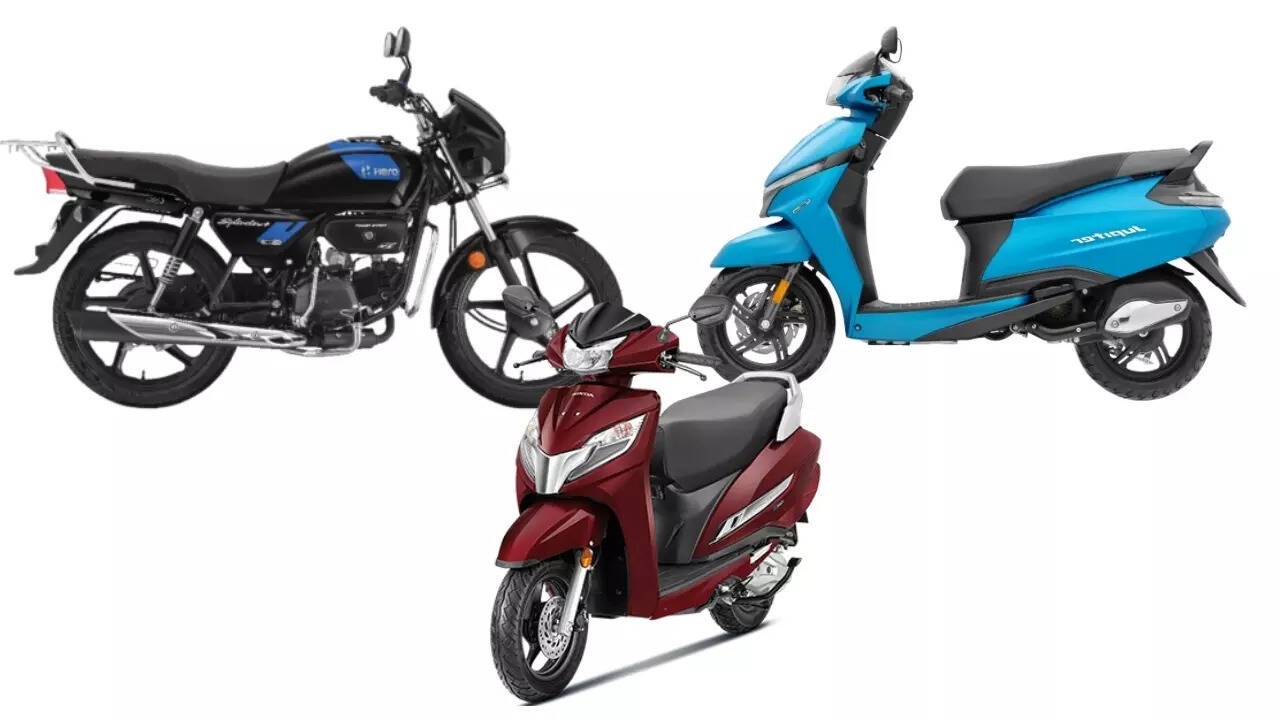
India Two-Wheeler Market Outlook
India's two-wheeler market is expanding as rural incomes rise, electric vehicle subsidies accelerate, and premiumisation reshapes consumer preferences. According to IMARC Group, the market is projected to grow steadily between 2026 and 2034. The industry spans motorcycles, scooters, mopeds, and electric two-wheelers across multiple technologies, engine capacities, and regions, serving approximately 900 million Indians as the primary personal mobility solution.
How Big is the Two-Wheeler Market in India?
The India two-wheeler market size increased from USD 24.5 Billion in 2025 to USD 26.7 Billion in 2026 and is projected to reach USD 46.1 Billion by 2034, growing at a CAGR of 7.08% during 2026–2034. Rising rural incomes and aspirational personal mobility demand, government FAME-III electric vehicle subsidies accelerating EV two-wheeler adoption, the premiumisation trend shifting consumer preference toward higher-cc motorcycles and feature-rich scooters, and India's position as the world's largest two-wheeler market by volume are the primary growth catalysts. West and Central India leads with a 34.0% market share in 2025, motorcycles command 56.0% of type share, and ICE technology represents 90.0% of the market.
Emerging Trends in the India Two-Wheeler Market:
Ola Electric and the EV Disruption Reshaping Competitive Dynamics:
Ola Electric's emergence as India's leading electric scooter OEM has fundamentally altered the competitive structure of India's two-wheeler market. Ola Electric's vertically integrated model challenged the established OEM distribution and manufacturing paradigm. The August 2024 Roadster series motorcycle launch signalled the EV startup's ambition to compete across the full two-wheeler product spectrum and introduced electric motorcycle competition into the segment where Hero MotoCorp, Honda, and Bajaj have traditionally dominated. This disruption is forcing legacy OEMs to accelerate their own EV programmes, invest in battery sourcing, and rethink dealer network electrification strategies.
Royal Enfield Premium Motorcycle Export Growth and Global Positioning:
Royal Enfield's transformation from a domestic commuter heritage brand to an internationally recognised premium motorcycle manufacturer represents India's most commercially significant premium segment development. International sales now represent a growing percentage of total volume, with the UK, Continental Europe, Southeast Asia, and Latin America becoming significant export markets for the Meteor 350, Himalayan, Classic 350, and Hunter 350 platforms. This success is attracting other international premium brands to expand their India presence, collectively developing the premium and super-premium motorcycle segment.
Connected and Smart Two-Wheeler Technology Adoption:
India's two-wheeler market is rapidly adopting connected vehicle technology features that were until recently exclusive to premium automobiles. Bluetooth connectivity, GPS navigation with turn-by-turn display on the instrument cluster, trip analytics mobile apps, and over-the-air software updates are now featured on mainstream 125–160cc motorcycles from Hero MotoCorp and Honda at price points below INR 100,000. This democratisation of connected technology is raising consumer expectations and creating new revenue opportunities through subscription-based services and telematics.
Premiumisation Shifting Demand Toward Higher-Displacement Segments:
India's two-wheeler market value is growing significantly faster than unit volume due to systematic consumer premiumisation. The 100–110cc entry commuter segment is progressively losing share to the 125–160cc executive segment and 200cc+ premium segment, driven by rising disposable incomes, aspirational consumption, and accessible financing options. The scooter segment's urban and female rider appeal has sustained growth, with automatic transmission convenience and underbody storage becoming key purchase drivers. This shift is lifting average selling prices and improving OEM margins across the industry.
➤ Request Sample Report with Datasheet: https://www.imarcgroup.com/india-two-wheeler-market/requestsample
Growth Factors Driving the India Two-Wheeler Market:
Rising Rural Income and Aspirational Mobility Demand:
India's rural economy has been experiencing above-average income growth driven by government schemes including PM-KISAN (direct income support to 9.44 crore farmers), MGNREGS (rural employment guarantee), and progressive improvement in agricultural commodity prices. Rising rural household income is the most important volume growth driver, as the first purchase decision upon crossing the INR 100,000–150,000 annual household income threshold in rural India is typically a 100–125cc motorcycle. This creates a steady stream of first-time buyers entering the market annually.
EV FAME-III Subsidies Accelerating Electric Adoption:
India's FAME programme's INR 15,000 per kWh consumer subsidy (capped at 40% of vehicle cost) enabled electric scooters to be priced competitively against premium ICE scooters at INR 90,000–130,000. The forthcoming FAME-III programme is expected to extend and potentially deepen subsidy support, incentivise longer-range battery pack adoption, and introduce PLI-linked domestic battery cell production requirements. These measures simultaneously support EV manufacturing localisation and reduce battery costs, improving the affordability proposition for electric two-wheelers.
Premiumisation Trend Driving Revenue Growth:
India's two-wheeler market value is growing significantly faster than unit volume due to systematic consumer premiumisation. The shift from entry-level to mid-premium and premium motorcycle and scooter categories is driven by rising disposable incomes, aspirational consumption, and the proliferation of accessible financing options. Premium motorcycle sales in the 200cc+ segment are growing at approximately 12–15% CAGR, outpacing the commuter segment. This premiumisation is lifting average selling prices and supporting OEM revenue growth even as unit volume growth remains moderate.
Expanding Last-Mile Delivery Fleet Electrification:
The rapid growth of e-commerce and quick commerce platforms is creating substantial demand for two-wheelers in last-mile delivery operations. Zomato, Swiggy, Zepto, Blinkit, and Amazon are increasingly procuring electric two-wheelers for their delivery fleets, driven by operational cost advantages and corporate sustainability commitments. This fleet electrification is creating bulk procurement opportunities for EV manufacturers and accelerating the adoption of electric two-wheelers in commercial applications where daily mileage is high and fuel cost savings are substantial.
Industry Value Chain Analysis:
Raw Material and Components Supply:
The value chain begins with steel coil and sheet supply, aluminium die casting, lithium-ion battery cell procurement, tyre procurement, and plastic body panel and LED lighting component sourcing. Steel accounts for approximately 15–20% of an ICE two-wheeler's production cost, while lithium-ion battery cells account for 30–50% of an electric two-wheeler's cost. Commodity price volatility directly impacts OEM margins and pricing strategies.
Manufacturing and Assembly:
Two-wheeler OEM assembly plants, outsourced sub-assembly from Tier-1 suppliers, and quality inspection and pre-delivery testing form the manufacturing stage. India's two-wheeler manufacturing is concentrated in clusters across Tamil Nadu, Haryana, Maharashtra, and Gujarat. Production efficiency and scale determine cost competitiveness, with leading OEMs operating multiple plants to serve regional demand.
Research and Development:
Vehicle platform R&D for new model development, emission compliance engineering, electric powertrain R&D, and connected vehicle technology integration are critical for product differentiation. Investment in R&D determines an OEM's ability to meet evolving emission norms, develop competitive EV platforms, and integrate connected features that consumers increasingly expect.
Sales and Dealer Network:
Franchise OEM dealer showrooms, OEM-direct digital sales channels, two-wheeler finance facilitation, and government fleet procurement tender supply connect products to customers. Dealer network depth and geographic reach are critical competitive advantages, particularly for reaching rural and semi-urban customers. Finance facilitation through NBFC partnerships enables first-time buyers to overcome affordability barriers.
After-Sales and Services:
Authorised service centre networks, OEM extended warranty and Annual Maintenance Contract programmes, EV charging infrastructure installers, and roadside assistance programmes support vehicle lifecycle. Service network density influences customer satisfaction and brand loyalty, particularly in rural areas where authorised service centres may be distant.
Market Segmentation Analysis
IMARC Group's latest research report on the India Two-Wheeler Market categorises the market based on type, technology, transmission, engine capacity, fuel type, end user, distribution channel, and region.
By Type:
Motorcycle
Scooters
Electric Two-Wheeler
Mopeds
Motorcycles dominate with 56.0% share in 2025, encompassing commuter motorcycles, executive motorcycles, and premium motorcycles. The type's dual role as a rural economic necessity and an urban aspirational product sustains its leadership. Scooters account for 28.0%, serving urban and peri-urban commuters prioritising automatic transmission convenience and underbody storage. Electric two-wheelers at 11.0% are growing at approximately 22% CAGR, concentrated in the scooter format. Mopeds at 5.0% serve entry-level and fuel-efficient commuting requirements.
By Technology:
ICE
Electric
ICE technology commands 90.0% of market value in 2025, reflecting the established conventional petrol-powered powertrain's price advantage, ubiquitous fuelling infrastructure, and consumer familiarity. ICE motorcycles and scooters start from INR 55,000–80,000, while electric equivalents start from INR 90,000–120,000 — a premium that requires 2–3 years of fuel cost savings to justify based on typical commuter usage. Electric technology is growing at approximately 22.5% CAGR and is expected to reach 20–25% market share by 2028–2030.
By Transmission:
Manual
Automatic
Manual transmission leads with 78.0% share in 2025, reflecting the dominance of motorcycles in the market mix. Automatic transmission is gaining share, driven by scooter demand and the growing popularity of automatic scooters among urban and female riders.
By Engine Capacity:
100-125cc
126-180cc
181-250cc
251-500cc
Above 500cc
The 100-125cc segment leads with 42.0% share in 2025, serving entry-level commuter demand across rural and urban markets. The 126-180cc segment is growing faster as premiumisation shifts demand upward, while the 200cc+ premium segments are growing at approximately 12–15% CAGR, driven by aspirational consumers and enthusiasts.
By Fuel Type:
Petrol
Diesel
Electric
Others
Petrol dominates with 47.0% share in 2025, supported by widespread fuelling infrastructure and lower upfront vehicle costs. Electric is the fastest-growing fuel type, driven by FAME subsidies, falling battery costs, and expanding charging infrastructure.
By End User:
Personal
Commercial
Personal use dominates with 94.0% share in 2025, reflecting the two-wheeler's role as the primary household mobility asset across income segments. Commercial applications including last-mile delivery fleets are growing rapidly, driven by e-commerce and quick commerce expansion.
By Distribution Channel:
Offline
Online
Offline channels lead with 89.0% share in 2025, reflecting consumer preference for physical inspection, test rides, and dealer relationships. Online channels are gaining share, particularly for electric two-wheelers where direct-to-consumer models are more prevalent.
By Region:
West and Central India
South India
North India
East India
West and Central India leads with 34.0% share in 2025, driven by Maharashtra's large urban two-wheeler consumption base, Gujarat's prominent two-wheeler manufacturing and consumption concentration, and the vast rural populations of Madhya Pradesh and Rajasthan. South India at 29.0% reflects Tamil Nadu's position as India's leading two-wheeler manufacturing state. North India at 21.0% is driven by UP and Bihar's massive rural motorcycle market, while East India at 16.0% represents the most significant geographic expansion opportunity.
Competitive Landscape and Key Player Positioning:
The India two-wheeler market competitive landscape is one of the world's most intensely contested, with top players collectively commanding approximately 80–85% of total market volume. The market's competitive structure is being disrupted by electric vehicle entrants that are challenging the legacy OEMs' distribution model, manufacturing approach, and product technology architecture simultaneously.
Key players include:
Hero MotoCorp Limited
Honda Motor Co., Ltd.
TVS Holdings Limited
Bajaj Auto Ltd.
Ola Electric
Ather Energy
Recent Developments in the India Two-Wheeler Market:
Hero MotoCorp Announces Plans to Launch New Motorcycles Under Hero and Harley-Davidson Brands in FY2026–27 (July 2026):
Hero MotoCorp Limited announced plans to launch new motorcycles under the Hero and Harley-Davidson brands in FY2026–27, targeting India's fast-growing 150–350cc premium segment. The expansion is supported by rising premium motorcycle demand and lower GST on sub-350cc models.
Honda Motorcycle & Scooter India Announces Plans to Launch Two to Three New Premium Motorcycles Above 200cc (July 2026):
Honda Motorcycle & Scooter India announced plans to launch two to three new premium motorcycles above 200cc as it strengthens its presence in India's growing 151cc–350cc segment. The company also plans to expand its electric-scooter portfolio and local manufacturing capacity to reduce its dependence on commuter motorcycles.
Customization Note: If you require any specific information not covered within this report's scope, we will provide it as part of the customization.
➤ Request Report Customization: https://www.imarcgroup.com/request?type=report&id=3991&flag=E
Frequently Asked Questions (FAQs)
Q1. What is the current size of the India two-wheeler market?
The market was valued at USD 26.7 Billion in 2026 and is projected to reach USD 46.1 Billion by 2034, at a CAGR of 7.08%.
Q2. Which type dominates the India two-wheeler market?
Motorcycles dominate with 56.0% share in 2025, reflecting the type's indispensable role as the primary personal mobility solution for India's rural population and the aspirational premium product for the growing urban middle class.
Q3. Which technology leads the India two-wheeler market?
ICE technology holds the dominant share at 90.0% in 2025, reflecting the conventional petrol-powered powertrain's price advantage, ubiquitous fuelling infrastructure, and consumer familiarity. Electric is the fastest-growing technology at approximately 22.5% CAGR.
Q4. Which region leads the India two-wheeler market?
West and Central India leads with a 34.0% market share in 2025, driven by Maharashtra's large urban and semi-urban two-wheeler consumption, Gujarat's prominent manufacturing and consumer base, and the vast rural motorcycle-dependent populations of Madhya Pradesh and Rajasthan.
Q5. What factors are driving the India two-wheeler market?
Key drivers include rising rural incomes from PM-KISAN and agricultural income growth expanding the first-time buyer base, FAME-III electric vehicle subsidies sustaining EV two-wheeler affordability, premiumisation shifting demand toward higher-displacement motorcycles, and last-mile delivery fleet electrification driving bulk EV procurement.